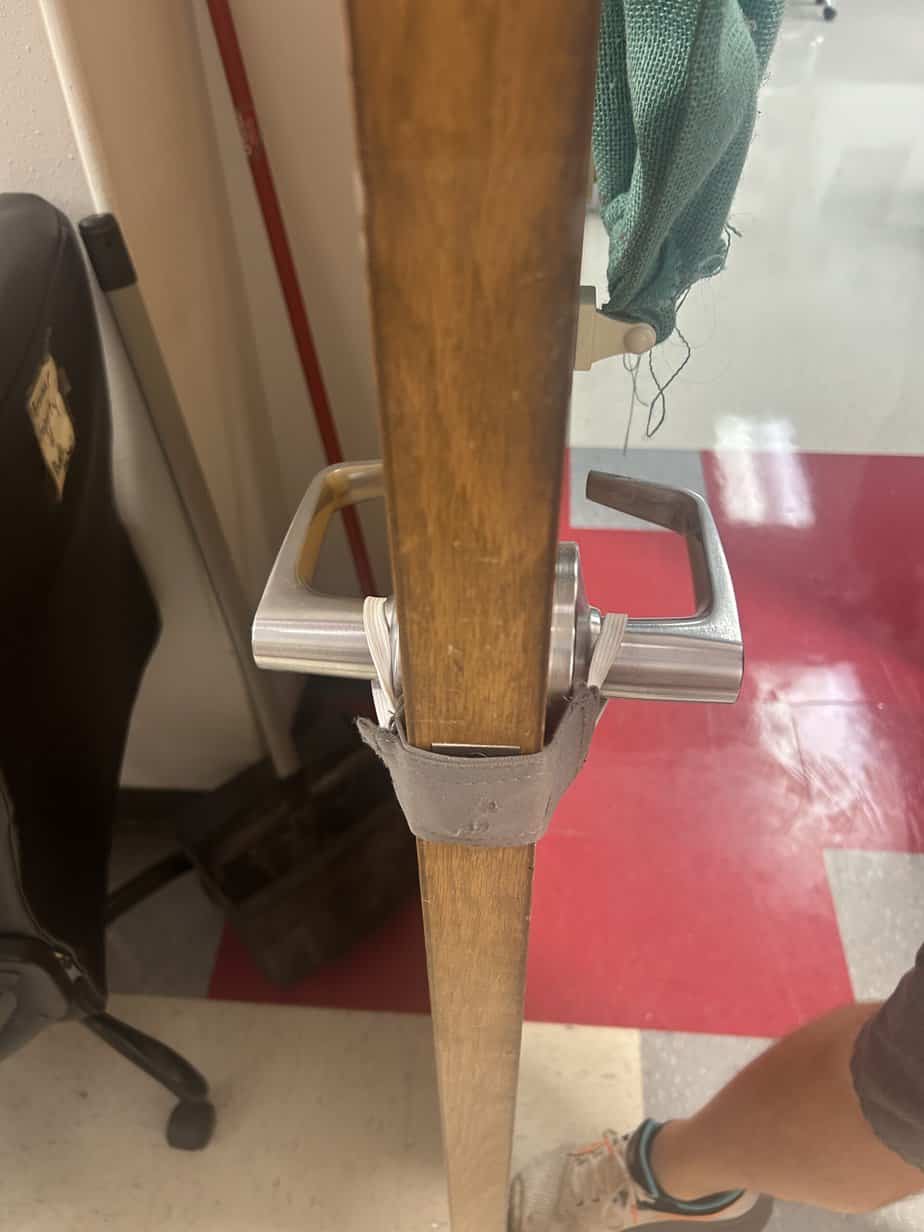
The lockdown announcement comes over the intercom. The teacher moves to the door. It is propped open — a latch cover someone installed months ago to keep the hallway accessible during transitions. The lock cannot engage. The door cannot close. Thirty seconds into the drill, the room is already compromised.
Locked classroom doors are one of the most well-documented protective factors in school safety. The 2015 Sandy Hook Advisory Commission report stated that “there has never been an event in which an active shooter breached a locked classroom door.” That finding still holds. The problem is not the hardware. The problem is everything that prevents the door from being locked when it matters.
Why Locked Doors Work
Active threat research is consistent on this point: a locked door creates time. Time is the variable that changes outcomes. A locked door forces an attacker to stop and breach it or move on. In documented incidents, attackers almost never forced through locked classroom doors — they bypassed them or were slowed long enough for law enforcement to respond or students to evacuate.
Seconds matter. A door that adds thirty seconds of delay is not a small thing. That is time for students to reach cover, time for staff to communicate, time for law enforcement to close the distance.
The Actual Problem: Doors That Cannot Lock
Most classroom shootings that occurred inside rooms happened in rooms that were not locked. The hardware worked. The door was not locked.
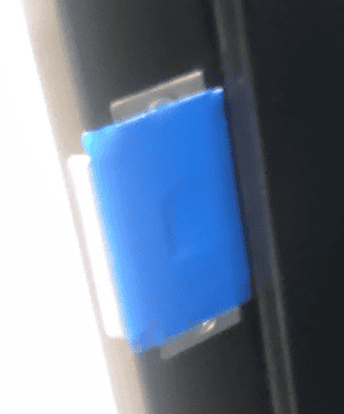
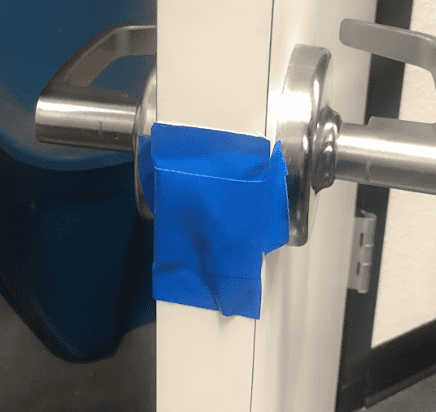
The most common cause is the latch cover. These devices prevent a door from latching — they are installed so staff can move freely without using a key. They are in buildings everywhere. Teachers use them during transition periods. Custodians use them during cleaning. Over time, they get left in place and forgotten.
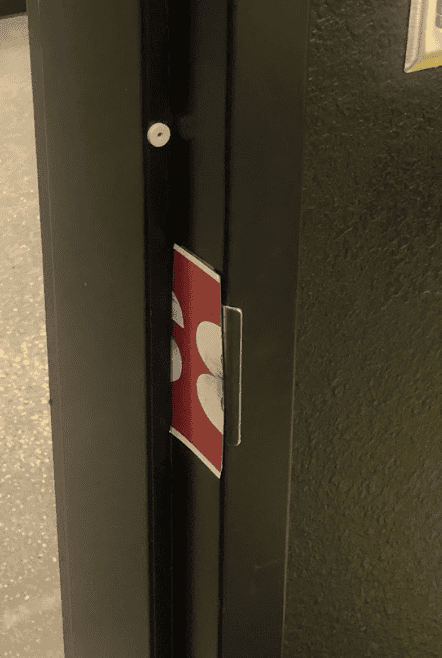
When a latch cover is in place, the door cannot lock without removing it first. A teacher responding to a lockdown does not have time to locate and remove a latch cover, close the door, engage the lock, cover the window, and position students — not in the seconds available before a threat reaches the hallway.
Other common causes of doors that fail during a lockdown:
- Locks that require a key from outside the room — the teacher has to step into the hallway during an active event to engage them
- Keys that are worn, missing, or stored in a different location than the classroom
- Doors that do not close fully due to misalignment or wear, preventing the latch from seating
- Propped-open fire doors in corridors that should stay closed
Hardware That Holds Up
Interior locksets that lock from inside. The teacher locks the door without opening it or stepping into the hallway. This is the baseline requirement. If your current hardware does not allow this, it is a priority replacement — not a budget conversation for next year.
Barricade devices. Secondary devices that brace against the door frame from inside, independent of the lock. Useful in older buildings where lock hardware cannot be easily swapped. They add a second barrier that slows breach attempts even if the primary lock is compromised.
Automatic door closers. These return a door to a closed, latched position after each opening. They do not replace a lock, but they eliminate the scenario where a door is left ajar and never fully closes.
If a door has a window, glass can be broken to reach the interior handle or lock. Forced-entry-resistant window film does not prevent glass from breaking — it holds broken glass in place and extends the time required to breach the door. That time difference is operationally significant.
What to Do Now
Walk every classroom in your building. Check three things: whether the door locks from inside without a key, whether any latch covers are installed, and whether the door closes and latches when released without help.
Remove every latch cover you find. Replace the system they were solving with a key policy or a sign-out procedure. Staff who need regular corridor access should carry keys — not defeat the lock entirely.
Run your next lockdown drill with actual door-locking as a required step. Have staff lock the door — not simulate it. You will find hardware problems during a drill. Find them now, not after an incident.
Add door hardware to your annual safety audit checklist. Locks wear out. Doors shift. This is not a one-time fix.
Risk Strategy Group conducts school safety audits that include a full physical security assessment — door hardware, access control, glazing vulnerabilities, and lockdown procedure gaps. We walk the building, document what we find, and give you a specific prioritized list of what needs to change. Contact us to schedule an assessment.