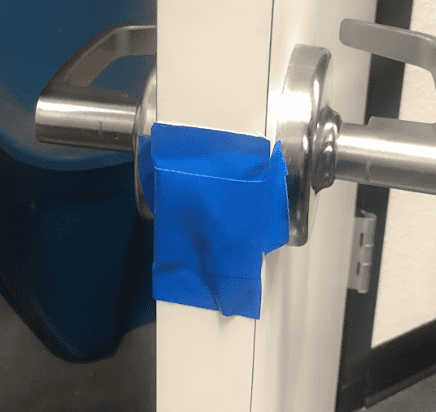
School doors play a key role in campus safety and Texas law sets clear rules to ensure secure entry points. Here’s what the law says about doors and how schools can meet these standards.
Doors Must Be Resistant to Forced Entry
Exterior doors must stop intruders. According to the Texas Administrative Code §61.1031(c)(3)(B), they must be built or reinforced so the glass cannot be easily broken to allow entry. Schools can use measures like forced entry-resistant film to comply with this rule.
Locks Must Work Automatically
Locks must engage on their own every time a door closes. This ensures doors are secured even if someone forgets. As required by TAC §61.1031(c)(3)(C), the locking mechanism must operate without manual intervention and allow emergency egress from inside.
Monitoring Unlocked Doors
Some doors may need to be unlocked temporarily, such as for ventilation or events. In these cases, TAC §61.1031(c)(3)(A) requires active monitoring by an adult who can take immediate action. If monitoring isn’t possible, the door must remain locked.
Why These Standards Matter
Weak or unsecured doors create risks. Secure doors that meet these standards provide time barriers, slowing intruders and allowing staff and first responders to act.
Steps to Follow
- Inspect Doors: Make sure doors are strong and resistant to forced entry.
- Upgrade Locks: Install automatic locks that engage without manual input.
- Plan Monitoring: Assign staff to watch unlocked doors when needed.
- Reinforce Glass: Use forced entry-resistant film on doors with glass to improve safety.
Texas schools must comply with these rules to protect students and staff. Following these requirements isn’t just about meeting legal standards—it’s about creating safer environments for everyone.
Need help securing your doors? Contact us to learn more.

Written by
Cody Martin
Cody brings over 20 years of federal law enforcement, training, and physical security expertise. He has advised and trained more than 20 Fortune 500 firms, along with schools, churches, government agencies, and private individuals across the country. As a federal agent, Cody served as Threat Management Coordinator for a three-state division, Officer Survival Subject Matter Expert at National Headquarters, and developed the agency's national Improvised Explosive Device Recognition and Response program from the ground up. He led threat management training across four states and served on a presidential protection detail. Cody holds a BS and a Master of Science in Criminal Justice from Tarleton State University. Notable work includes creating and delivering the national IED Recognition and Response training program for a federal law enforcement agency, serving as Officer Survival and Firearms Subject Matter Expert at National Headquarters, Threat Management Coordinator overseeing instructors across Texas, Oklahoma, and Arkansas, serving on a presidential protection detail, conducting risk assessments and security plans for Fortune 500 companies and ultra-high-net-worth individuals, and publishing in RECOIL OFFGRID, RECOIL CONCEALMENT, and SKILLSET on situational awareness, EDC, and concealed carry.