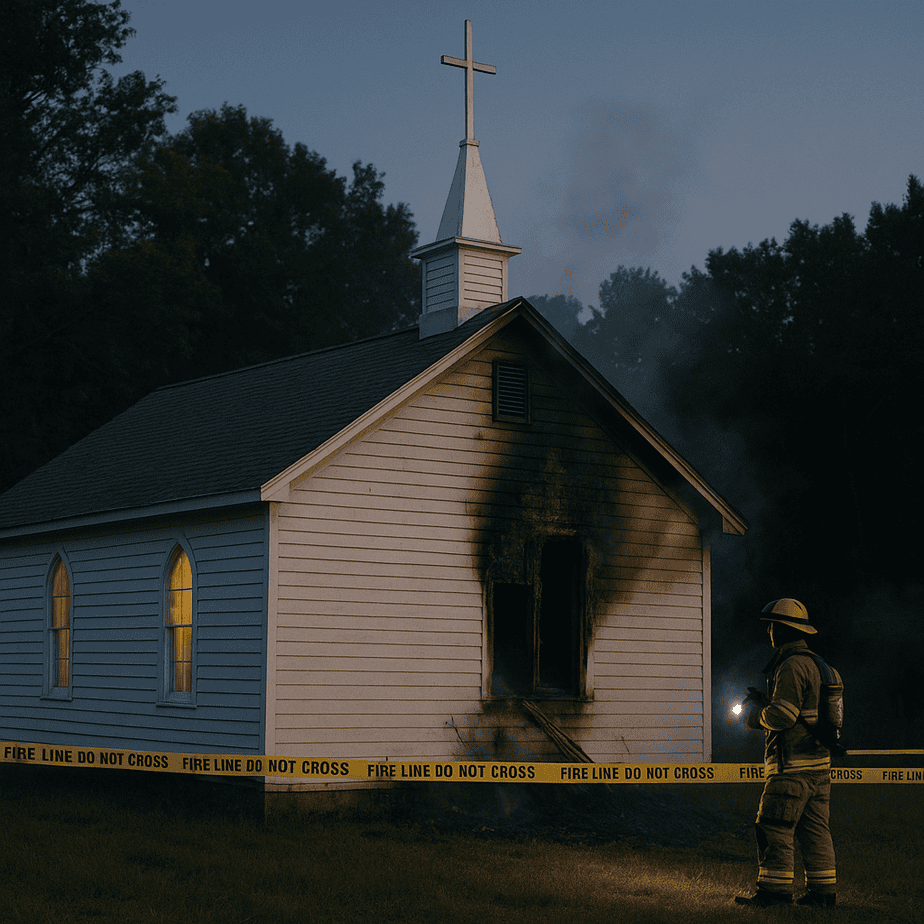
Fires at churches, synagogues, and mosques happen more often than people realize. Many of them are not accidents. They’re arson.
Between 1996 and 2015, more than half of all fires at U.S. houses of worship were set on purpose. That’s 2,378 arsons out of 4,705 total fires, according to a Pew Research Center review of federal data.
From 2000 to 2015, an average of 103 arsons per year targeted religious properties in the U.S. (ATF data). In 2011, 16 percent of all fires at churches and funeral homes were ruled intentional.
Most fires in homes are caused by accidents, like cooking or wiring. But houses of worship are different. They are public, symbolic, and often sit empty during the week. That makes them easier to target.
Who starts these fires and why?
The motivations vary. Some are hate crimes. Some are acts of vandalism. Others are linked to mental illness, personal grudges, or a desire to make a political or religious statement.
These attacks are not limited to one group. They’ve affected Black churches in the South, synagogues in major cities, and mosques across the country. They’ve happened in urban neighborhoods and rural towns.
In 1996, Congress passed the Church Arson Prevention Act in response to a surge in arsons targeting Black churches. The federal government created a special task force to investigate and prosecute these crimes. The wave slowed, but the threat never stopped.
Recent cases show it still happens:
- In July 2025, a man poured fuel on the doors of the East Melbourne Hebrew Congregation during a Friday night dinner. About 20 people were inside. He was arrested and charged with terrorism.
- In Rhode Island, a man admitted to setting fires at a predominantly Black church using gasoline.
- In West Virginia, a man was charged after a rural church was set on fire in May 2025.
- A woman in Washington state pleaded guilty to torching a Lutheran church building.
What churches can do
You can’t stop every threat. But you can make it harder for someone to succeed.
Here are a few steps churches can take:
- Lock doors and windows when the building is empty
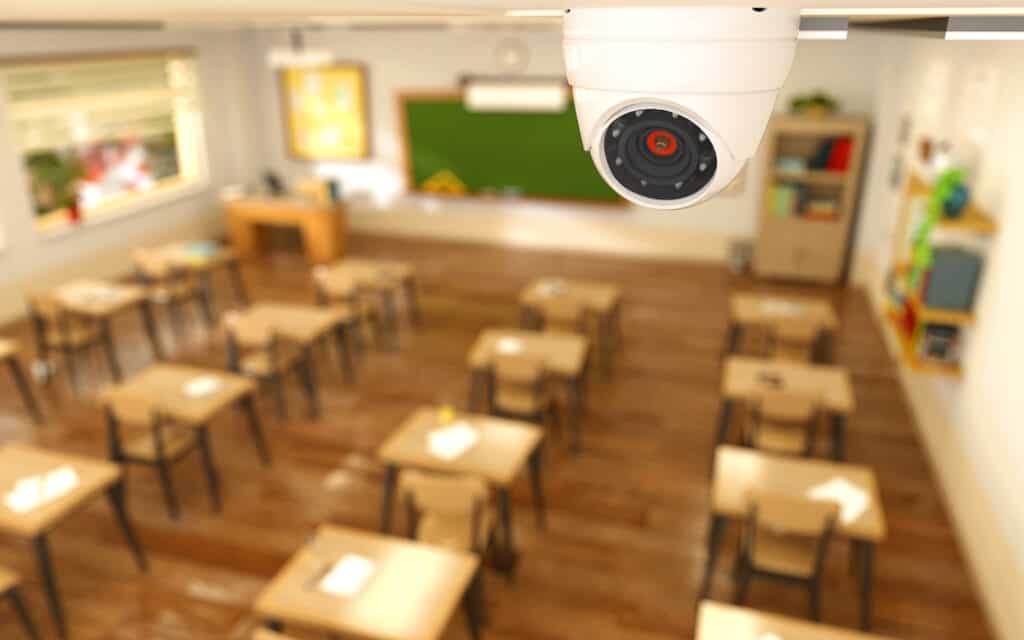
- Use exterior lighting and basic surveillance cameras
- Keep dry brush and trash away from the building
- Store flammable items in secured rooms or cabinets
- Encourage neighbors and staff to report anything suspicious
- Meet with your local fire and police departments and ask them to walk the site with you
Most arsons aren’t elaborate. They’re simple acts, often carried out at night by one person with a lighter and a can of fuel.
That’s why the first layer of defense is visibility. Light, locks, and community awareness go a long way.
If your church doesn’t have a fire plan, write one. If your volunteers don’t know what to watch for, train them.
The church is not just a building. But when it burns, the impact reaches far beyond wood and stone. Taking small steps now can prevent big losses later.