Most security plans are built around one idea: stop the bad guy at the door. That’s not a security plan. That’s a hope.
The 5-D model is what a real layered security plan looks like. Deter, Detect, Deny, Delay, and Defend. Each layer assumes the one before it will eventually fail. That’s the point.
Deter
Your facility is either a hard target or an easy one. Most attackers make that call before they get out of the car.
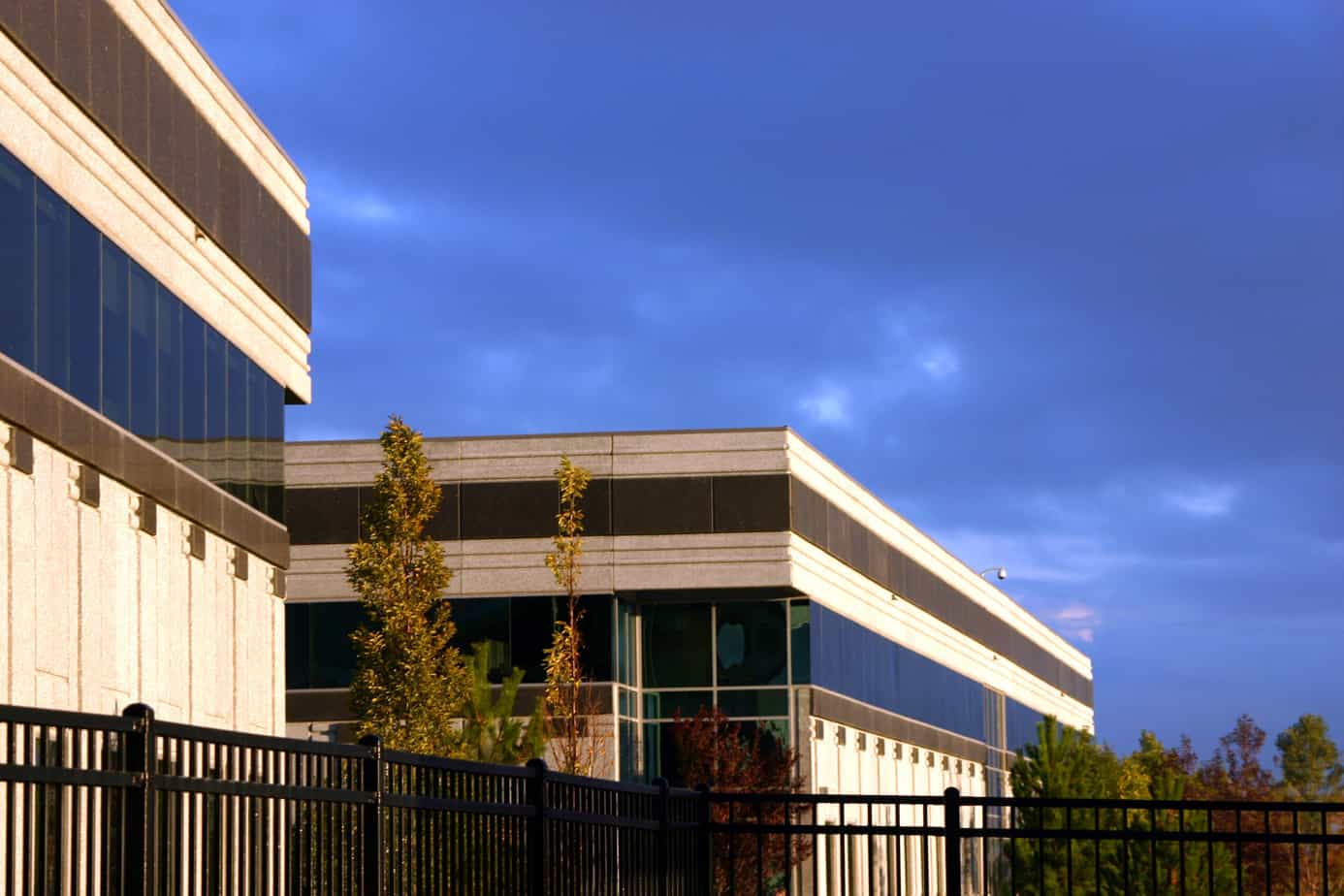
Good lighting, visible cameras, a defined perimeter, and a security presence during high-traffic hours. These signals don’t have to be expensive. They have to be present. Someone looking for an easy opportunity will pass over a facility that looks like it’s paying attention.
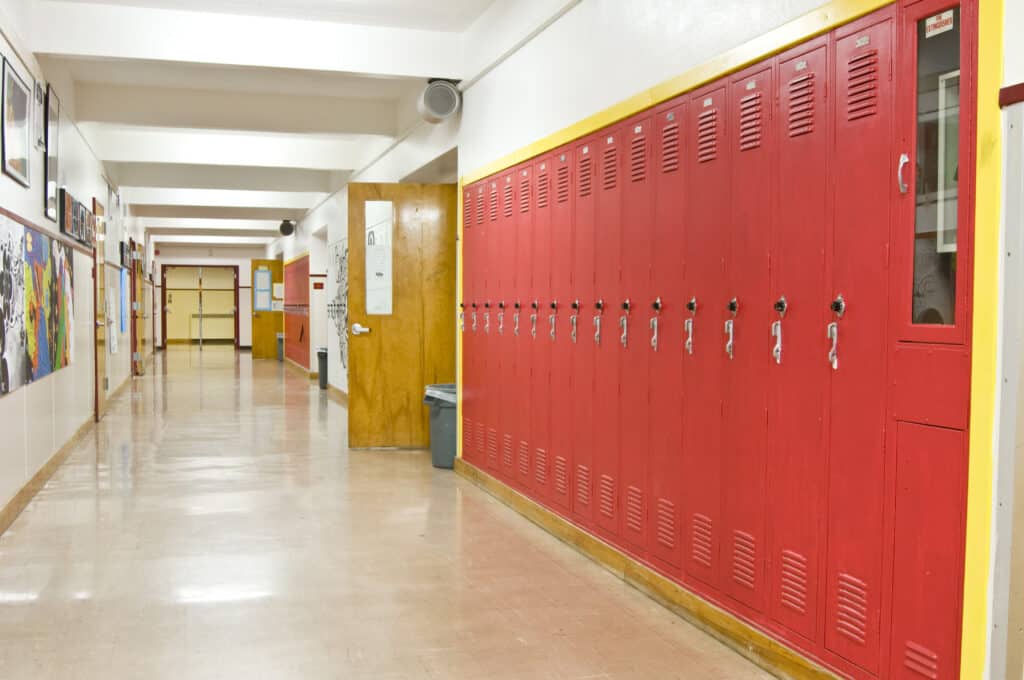
For churches, deterrence starts in the parking lot. For schools, it starts with who controls the front entrance and whether that control is visible. If your facility looks managed, it filters threats before any other layer has to work.
Detect
Detection is the gap most facilities don’t close.
You can have cameras on every corner and still have a detection failure if no one is trained to recognize pre-attack behavior: perimeter probing, someone testing exit routes, a person who shows up multiple times before anything happens. Technology flags anomalies. Trained people recognize patterns.
Most incidents have a warning period. Detection doesn’t require predicting the future. It requires paying attention to what’s already visible. The Sandy Hook shooter had a documented threat history. The Nashville Covenant shooter had observable pre-event activity.
If your security plan ends at “we have cameras,” your detection layer isn’t operational.
Deny
Denial is access control, and access control is not just locked doors.
It’s a single controlled point of entry. Visitor management with ID verification. Interior zones that limit movement once someone is inside. The goal isn’t only to stop unauthorized entry. It’s to force a threat to work harder and longer before reaching people. Every additional step costs the attacker time. Time is what every other layer in this model is buying.
Schools under Texas HB3 have specific denial requirements. Churches have more flexibility, but that flexibility can become a liability if it means 12 unlocked exterior doors on a Sunday morning.
Delay
If someone gets through denial, delay is what happens next.
Security film on entry glass. Door barricade hardware in classrooms. Interior barriers that slow movement. None of these stop a determined attacker permanently. What they do is extend your response window.
The Covenant School shooting was over in 14 minutes. Law enforcement response was fast by any standard. In a slower response scenario, and most schools are not in Nashville, those 14 minutes look very different depending on whether staff were barricaded or caught in an open hallway. Delay buys time. Time changes outcomes.
Defend
Defense is what happens when every other layer has already been tested.
For schools, that means trained staff who know how to respond inside the building: not just lockdown, but active threat response protocols like ALICE or CRASE. For churches, it may mean an armed team, off-duty law enforcement, or both.
Two things to be clear on. Defense is a last resort, not a first line. And a firearm without training isn’t a defense layer. It’s a liability dressed up as one.
Walk Your Facility with These Five Questions
What does your building signal to someone looking for an easy target? Where are your observation gaps? How many entry points are unlocked right now? If someone bypasses those doors, how much time does your team have? And what is your team actually trained to do when things have already gone wrong?
Most facilities have gaps in two or three of those layers. That’s the starting point, not a failure.
RSG conducts 5-D assessments for schools and churches. We walk the facility, map each layer, and give you a prioritized set of recommendations you can act on. Contact us here.

Written by
Cody Martin
Cody brings over 20 years of federal law enforcement, training, and physical security expertise. He has advised and trained more than 20 Fortune 500 firms, along with schools, churches, government agencies, and private individuals across the country. As a federal agent, Cody served as Threat Management Coordinator for a three-state division, Officer Survival Subject Matter Expert at National Headquarters, and developed the agency's national Improvised Explosive Device Recognition and Response program from the ground up. He led threat management training across four states and served on a presidential protection detail. Cody holds a BS and a Master of Science in Criminal Justice from Tarleton State University. Notable work includes creating and delivering the national IED Recognition and Response training program for a federal law enforcement agency, serving as Officer Survival and Firearms Subject Matter Expert at National Headquarters, Threat Management Coordinator overseeing instructors across Texas, Oklahoma, and Arkansas, serving on a presidential protection detail, conducting risk assessments and security plans for Fortune 500 companies and ultra-high-net-worth individuals, and publishing in RECOIL OFFGRID, RECOIL CONCEALMENT, and SKILLSET on situational awareness, EDC, and concealed carry.